Personal AI operating system
NEXUS OS
Not a chatbot. The brain of the house and the servers.
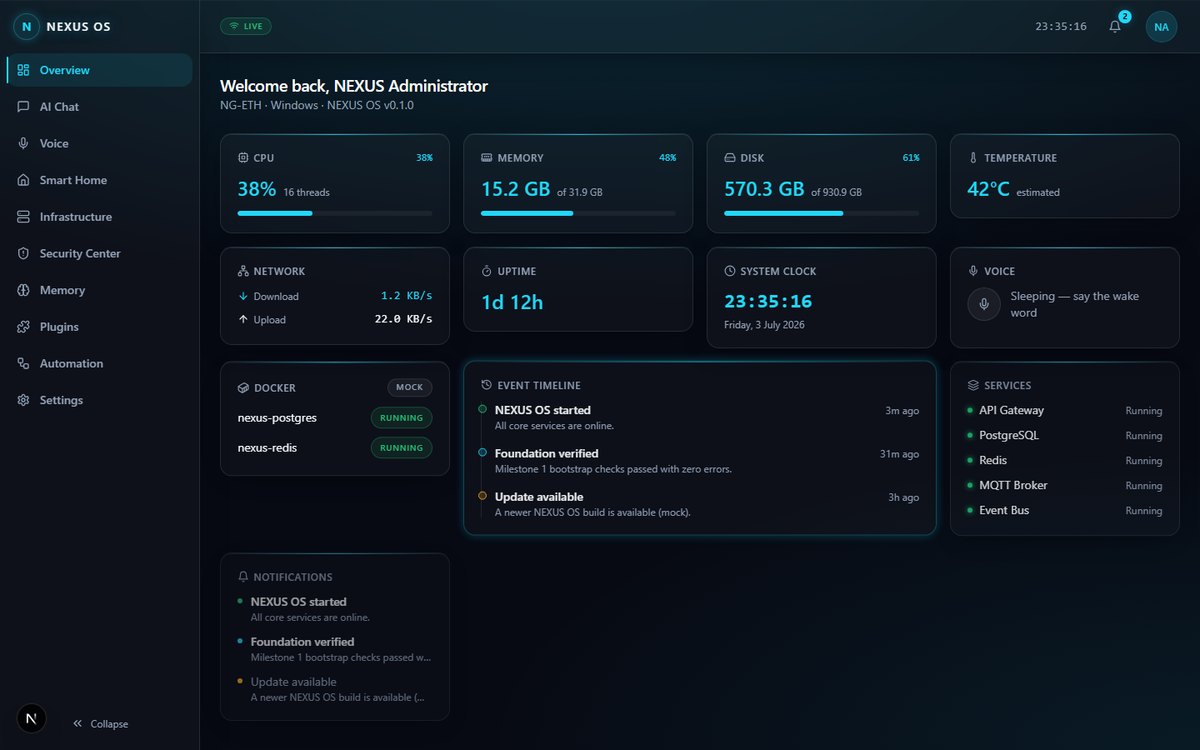
Overview
NEXUS OS by Nick Gaitan is my flagship personal project: an AI-native, modular operating system running 24/7 on a Raspberry Pi 5 and built to scale to Linux servers, NAS, Docker and K3s clusters without a redesign. It speaks Greek and English, controls the smart devices, watches the infrastructure and protects the network — through specialised AI agents under one brain.
The challenge
Smart home on one side, servers on another, AI on a third, monitoring on a fourth — dozens of disconnected apps that never talk to each other. And most AI assistants require shipping your data to third parties, remember nothing meaningful, and never touch your actual infrastructure.
The solution
The architecture was written first — 24 design documents, not a line of code — against 13 principles every decision is checked on: modular, event-driven, plugin-based, AI-native, API-first, secure by design, privacy-first, local-first. Then it was built: six layers on an event bus, an AI router across five providers, a fully offline voice pipeline, a multi-agent core, memory system, security center, vision, health monitoring and a plugin system. FastAPI backend with PostgreSQL, Redis and MQTT; Next.js dashboard; all in Docker.
Technologies
From the project
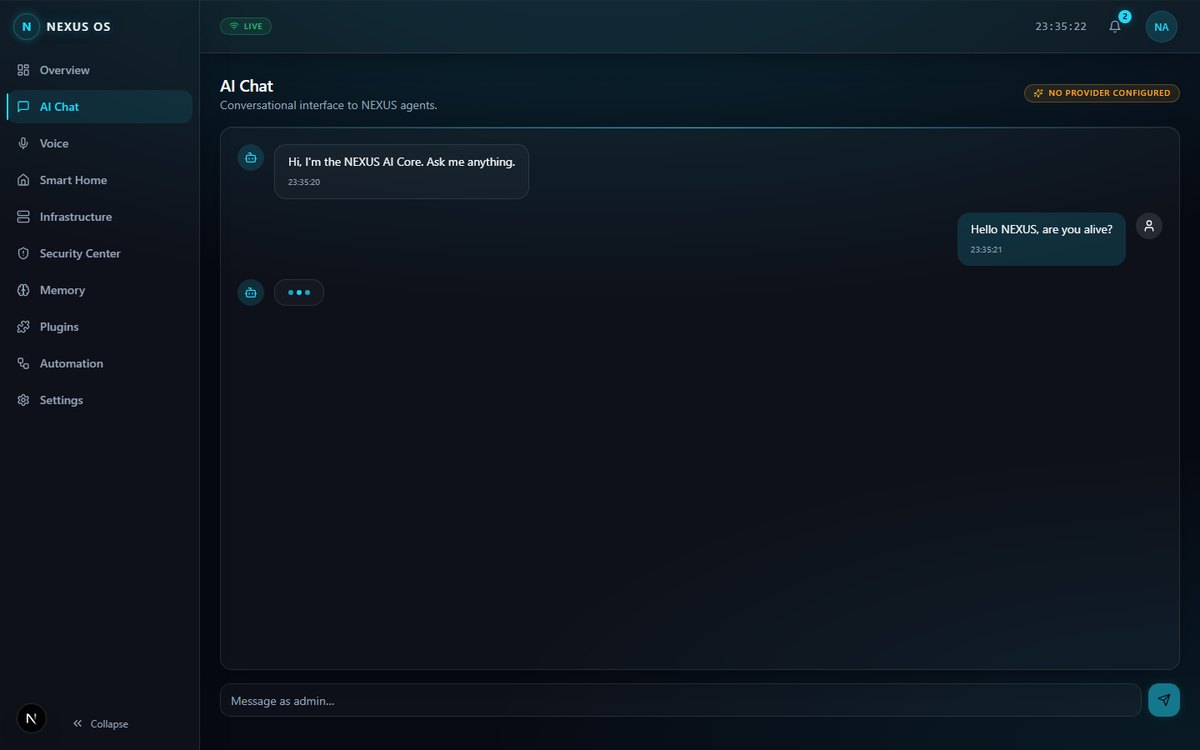
AI Chat
Conversational interface to the NEXUS agents. The router picks a provider per request — or states plainly that none is configured.
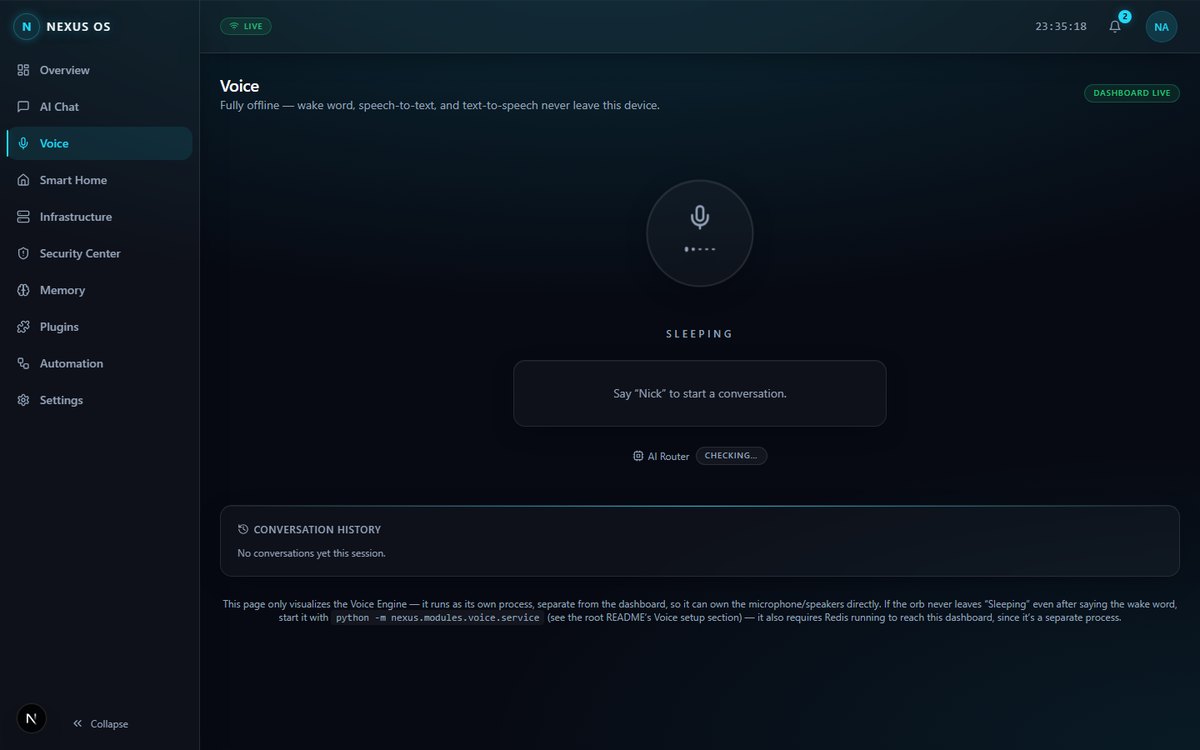
Voice
Fully offline: wake word, speech-to-text and text-to-speech never leave the device. It wakes on “Nick”.
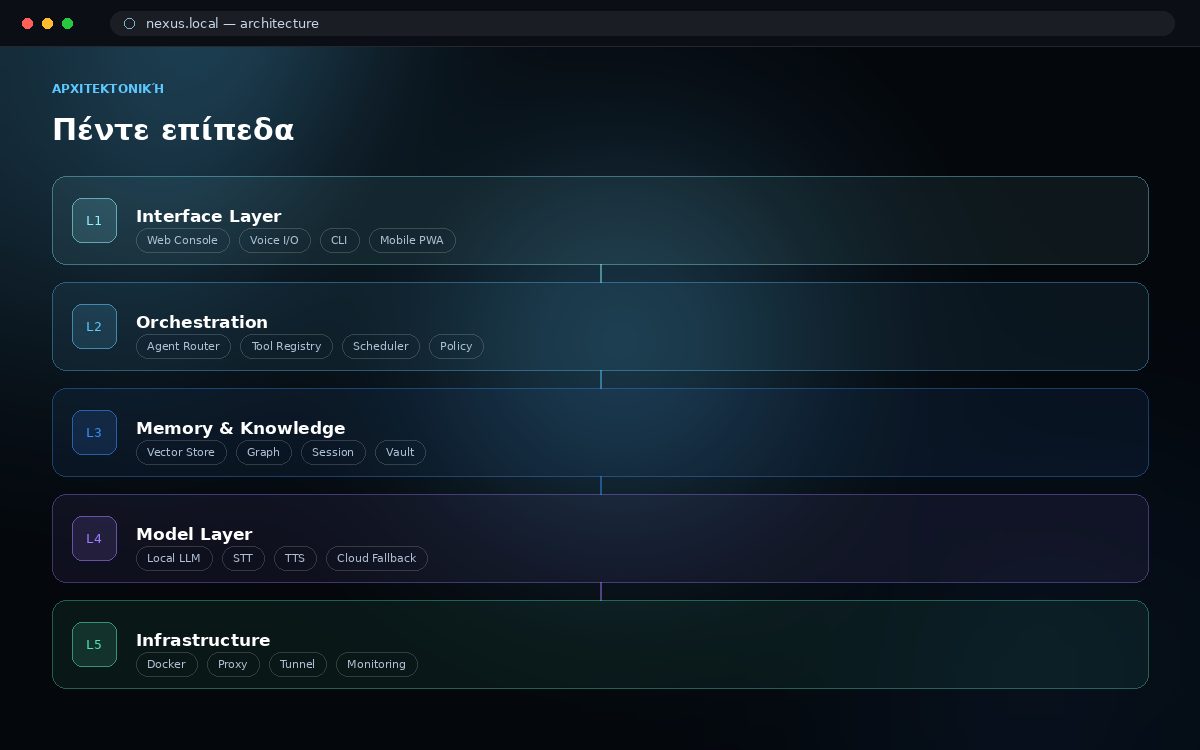
Architecture
The six layers and the subsystems that fill them, as specified across 24 design documents.
Outcome
- 24 architecture documents written before the first line of code
- Six independent, swappable layers on an event bus, all in Docker
- An AI router across five providers — local or cloud, per request
- A 100% offline voice pipeline — wake word, STT and TTS stay on device
- Six smart-home protocols unified behind a single interface
- Exportable memory in open formats — zero vendor lock-in
- Every system action logged and explainable